

Amazon Spheres Architectural Design & Prototyping Process
The design process behind these sci-fi offices showcases a fantastic use of rapid prototyping technologies like laser cutting and 3d printing.
If you haven’t been to the Seattle area recently, you may not be familiar with the Amazon Spheres. These sci-fi co-working offices showcase a fantastic use of rapid prototyping technologies like laser cutting and 3d printing in the early design stages, used to build an initial scale model of the “catalan” modules, which give the domes a pentagonal skeleton structure.
Source: Wall Street Journal
Architectural firm: NBBJ

Building up parts on the pentagonal scale model structure using laser cut wood and paper cardstock:


These laser cut parts are later transformed into 3d Printed Catalan Module - or 'elongated pentagon' building block:
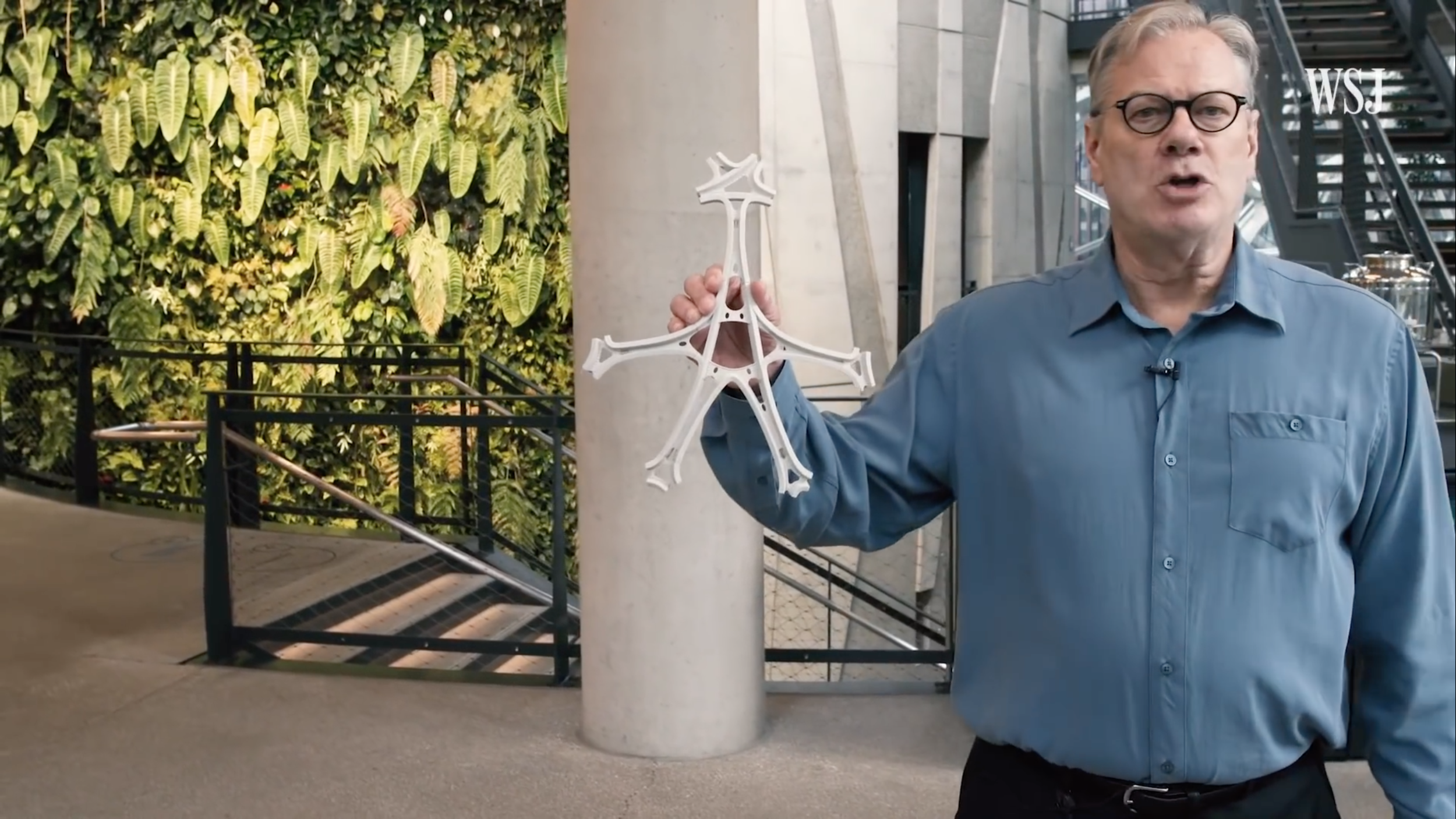

Finally, the small scale 3d-printed prototypes are then realized as 1:1 full scale interlocking steel structural parts:


The space is designed to be an alternate environment for amazon executives and employees, giving them a natural green space to work from — all in the sake of helping spark productivity, creativity, and reducing stress:


The Maker's Field Guide: Master Maker Edition is now available!
More on laser cutting, 3d printing, and many more rapid prototyping techniques and more can be found in The Master Maker edition of The Maker's Field Guide. Now available as both a digital ebook or premium quality photography book through the online store.

Making of the Batman Batsuit : Behind the Scenes of a Hollywood Effects Shop
A look into the model shop behind Batman Begins, reveals a highly sophisticated combination of industrial design, foam latex prosthetics, model making, costume design, and technical apparel / fashion design (softgoods or “cut & sew”). Maker’s Rejoice!
I have always had tremendous respect for the amount of labor and quality work that has gone into Hollywood blockbuster films. Even in today’s digital effects world, practical effects lead by teams of propmasters and model makers continue to give an air of believability that simply cannot be simulated through SFX. There’s just nothing like the real thing, right? Throughout the years, I have personally gravitated towards films that lean heavily on the use of practical effects — such as Terminator 2, Iron Man (Stan Winston / Legacy Studios), Oblivion, and Batman.
A look into the model shop behind Batman Begins, reveals a highly sophisticated combination of industrial design, foam latex prosthetics, model making, costume design, and technical apparel / fashion design (softgoods or “cut & sew”):
Clay Sculpting
Lifecasting
Bondo Auto Body Filler
RTV Molding & Casting
Fiberglass Composites
Spray Painting
Industrial Sewing
Maker’s Rejoice!
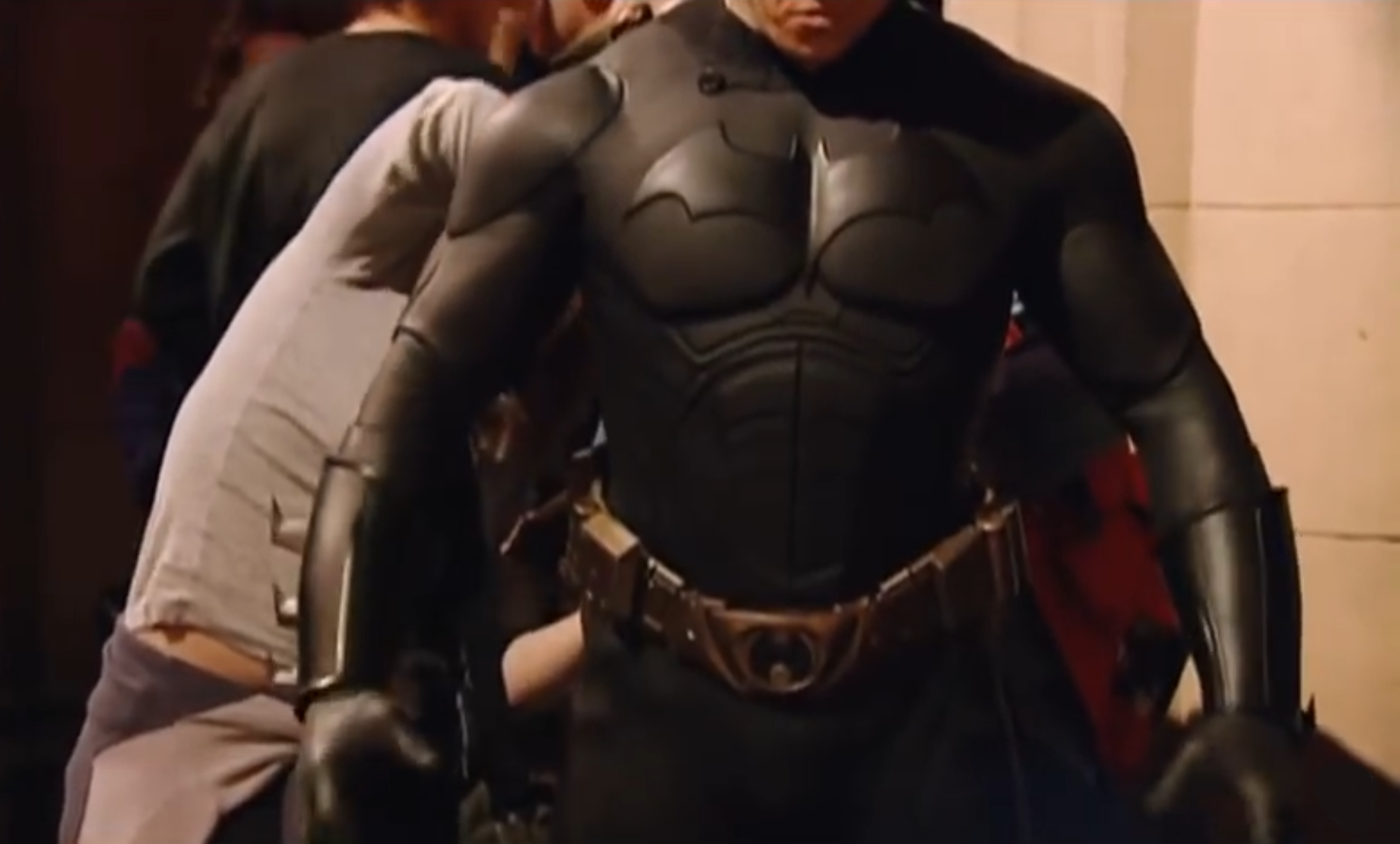
Clay Sculpting:

Bondo Auto Body Filler finishing:
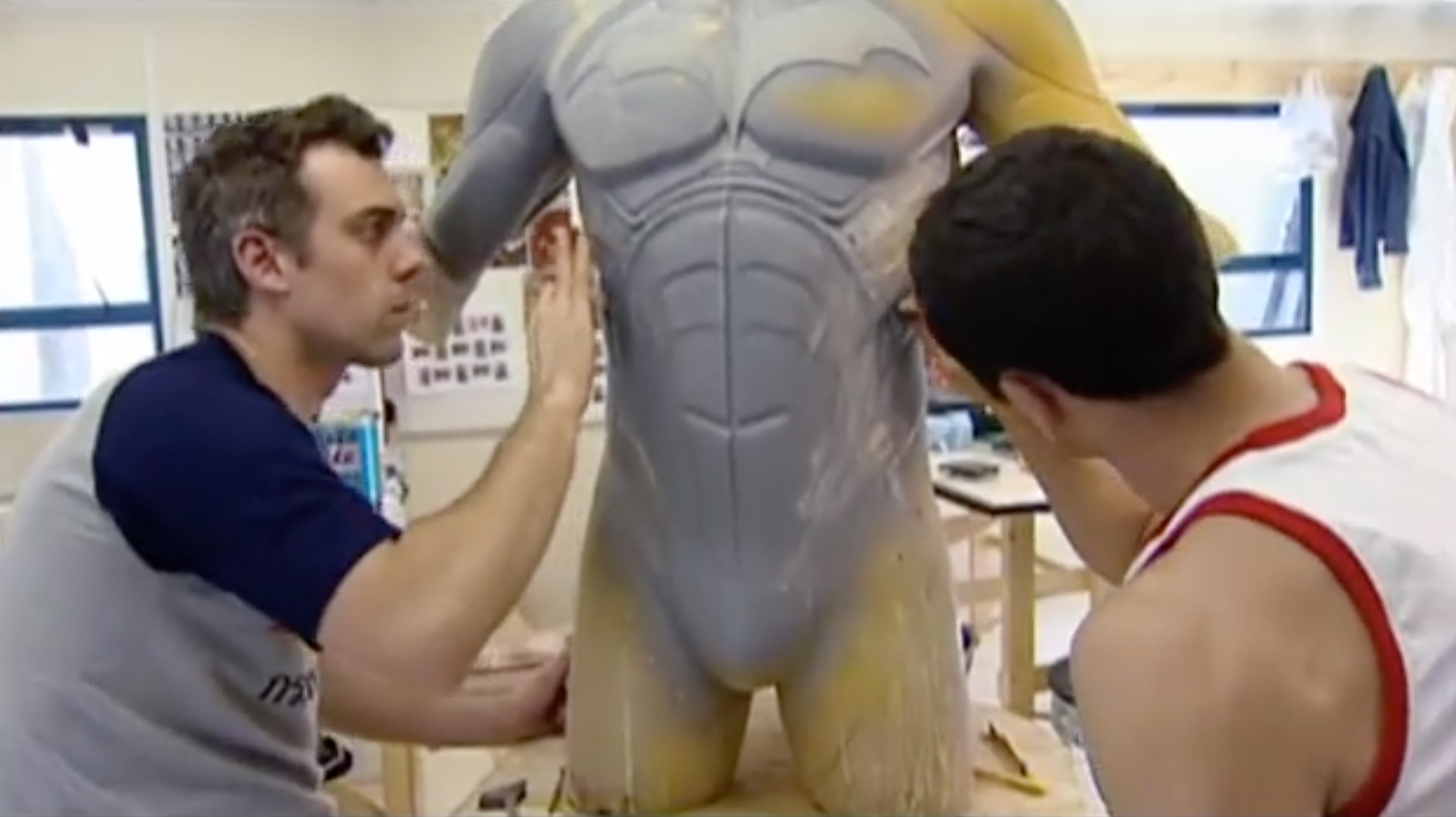

Lifecasting:


RTV Molding & Casting (foam latex):


Fiberglass Composites:


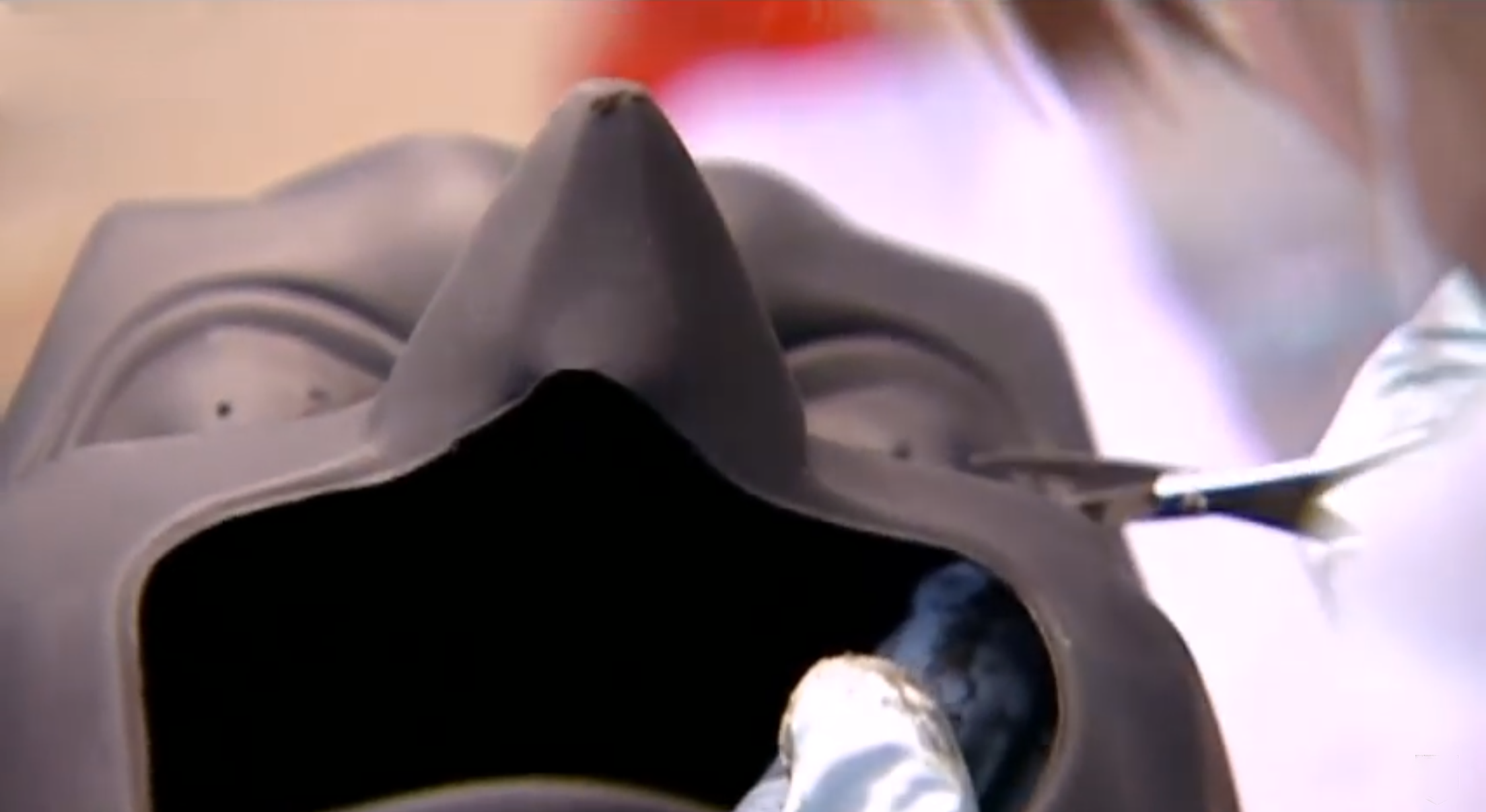

Spray Painting:

Industrial Sewing:


*All content featured in this post is shown strictly for educational learning purposes only. All image rights belong to their respective owners.
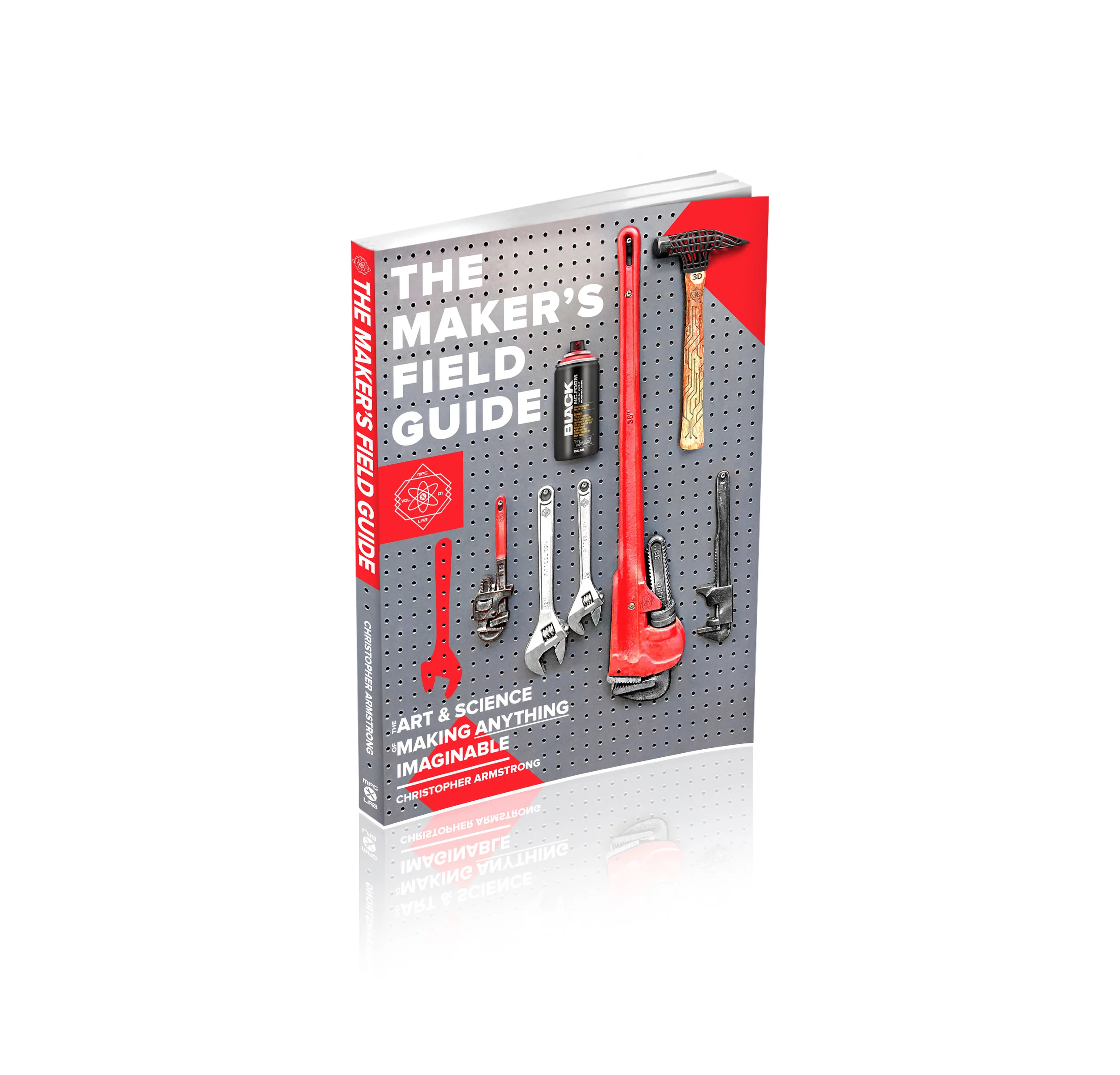
The Maker's Field Guide: Book & Ebook Available Now
These tips and more can be found in The Maker's Field Guide — the most advanced guide to making anything on the planet. Written from a professional industrial designer with over 7+ years experience in the industry. Now available as digital ebook or premium quality coffee table book through the online store!
Kit-Bashing For Concept Design & Entertainment Design : Robot Mech Design Process
Kit-Bashing is a technique made famous in the original Star Wars film franchise, where it was first pioneered to create the intricately-detailed concept fighter jets like the X-Wing, and even the Death Star itself. This technique is blazingly quick, and still quite effective for making very convincing props for film or special effects. The process uses parts Frankensteined together from various model kits, hardware store parts, and various scraps. Once a design silhouette is established with bulk parts, glue and an armature skeleton, the model kit parts are then added to give another layer of textural design interest. The final design can then be primered and painted, to give a realistic model prop effect.
*The Kit Bash build process shown below has been adapted from a class I formerly taught with John Park at the Red Engine School of Design, and later Concept Design Academy (CDA) called Advanced Vehicle & Mech Design:
Make sure to pick up a good variety of parts. Don't feel like you have to constrain yourself to the pre-designed kits like the military or Gundam kits, sometimes the most simple objects work the best: glue sticks, random computer parts, bottle caps, plastic drink cups and yogurt cups, etc. Most importantly be sure to pick up some armature wire, this will be used for the main skeleton structure for all other parts to be placed on top.


Building up parts on the armature (for here you'll want basic shapes like computer parts, plastic styrene sheet or credit cards, etc). Hot glue is used to set the parts in place, drying very quickly:

Once all of the parts have been glued in place, it will look like a kaleidoscope of different mis-matched colors botched together. Don't worry, these parts will all be unified nicely after a coat of primer:


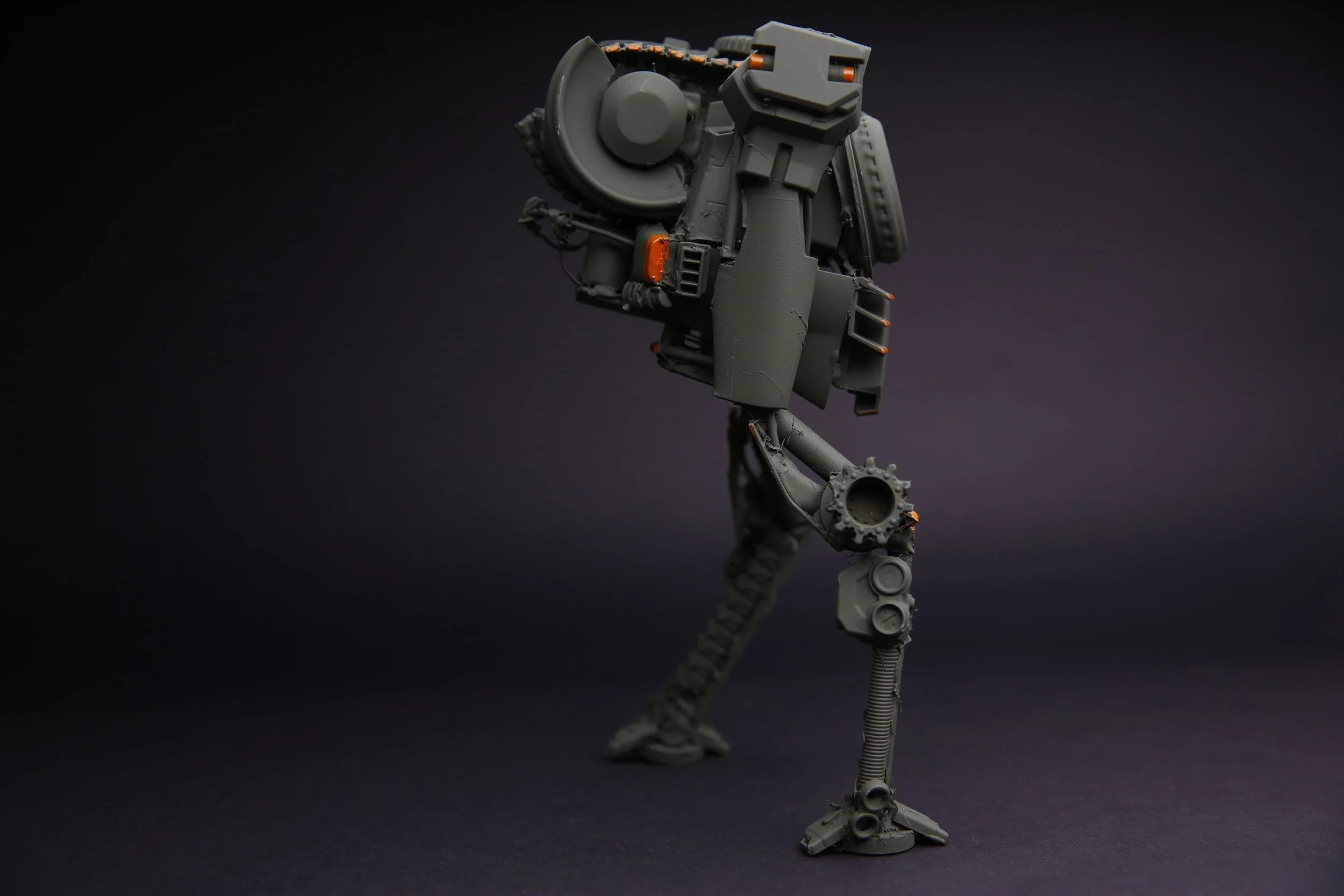
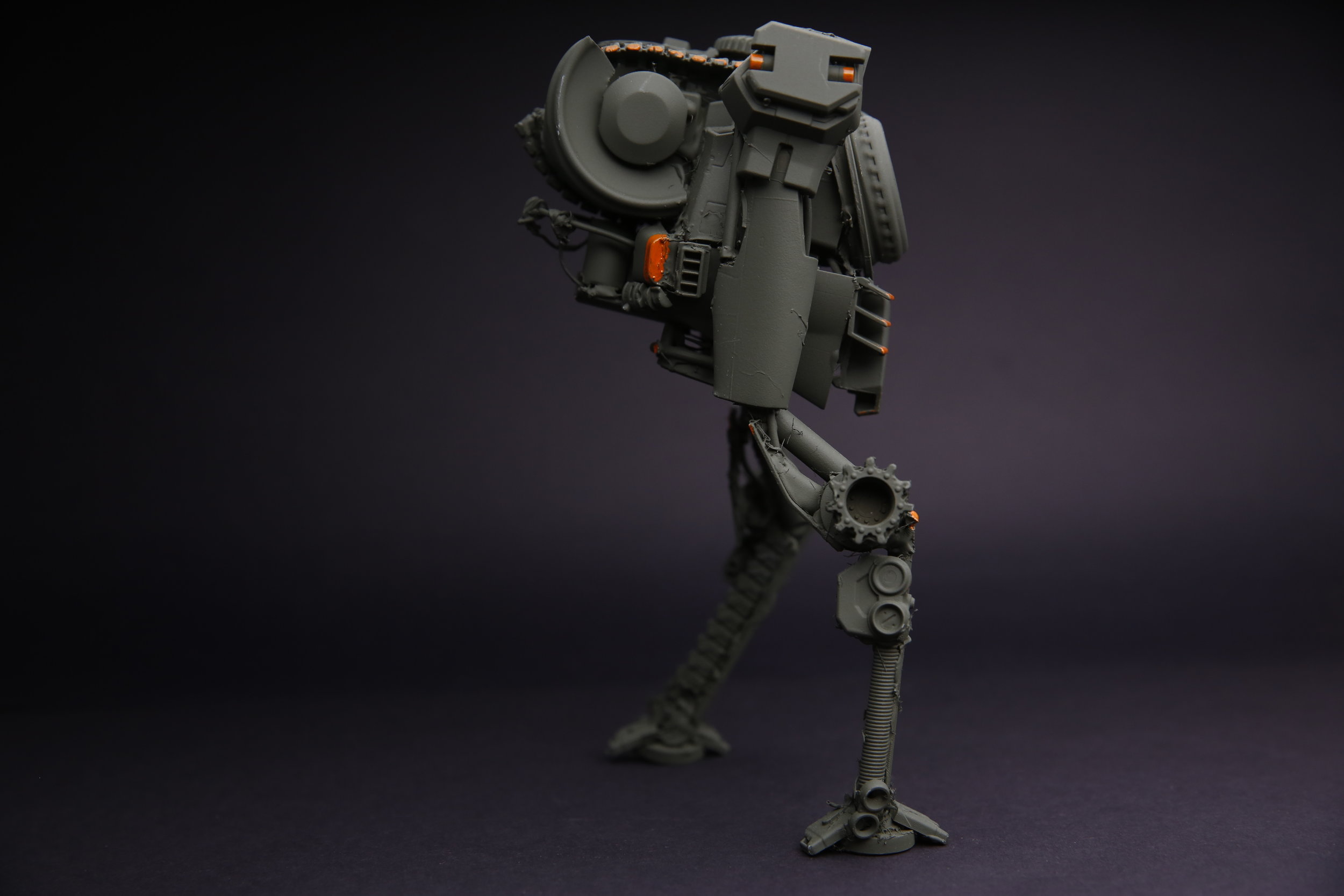
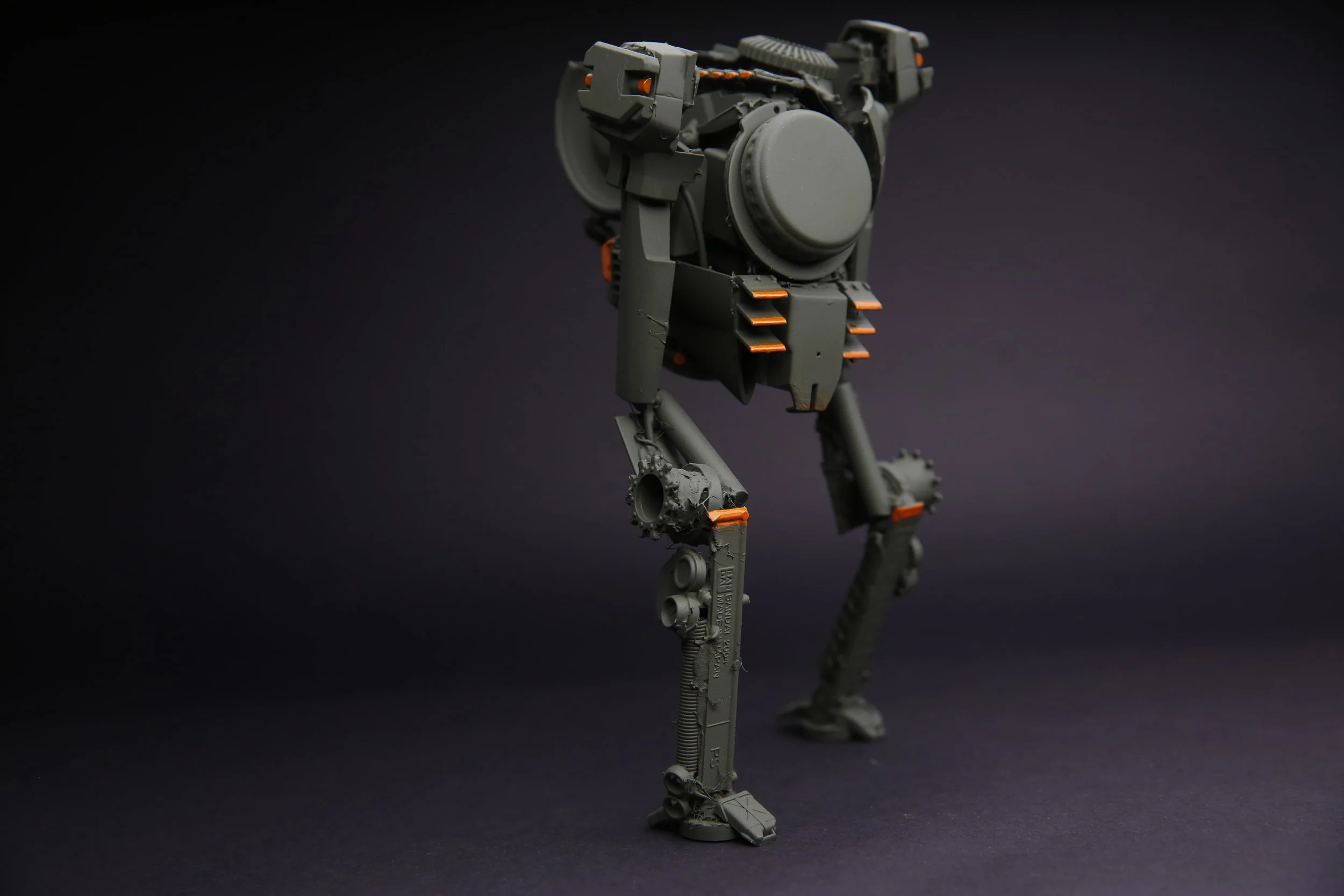
Finally, a coat of olive drab paint with safety orange color-blocking is added, to simulate a heavy piece of industrial machinery. Quite incredible what a solid photography & lighting setup can do, isn't it? :
The Maker's Field Guide: Master Maker Edition is now available!
More on kit-bashing can be found in the all new Advanced Projects chapter exclusively available in The Master Maker edition of The Maker's Field Guide. Now available as both a digital ebook or premium quality photography book through the online store.